
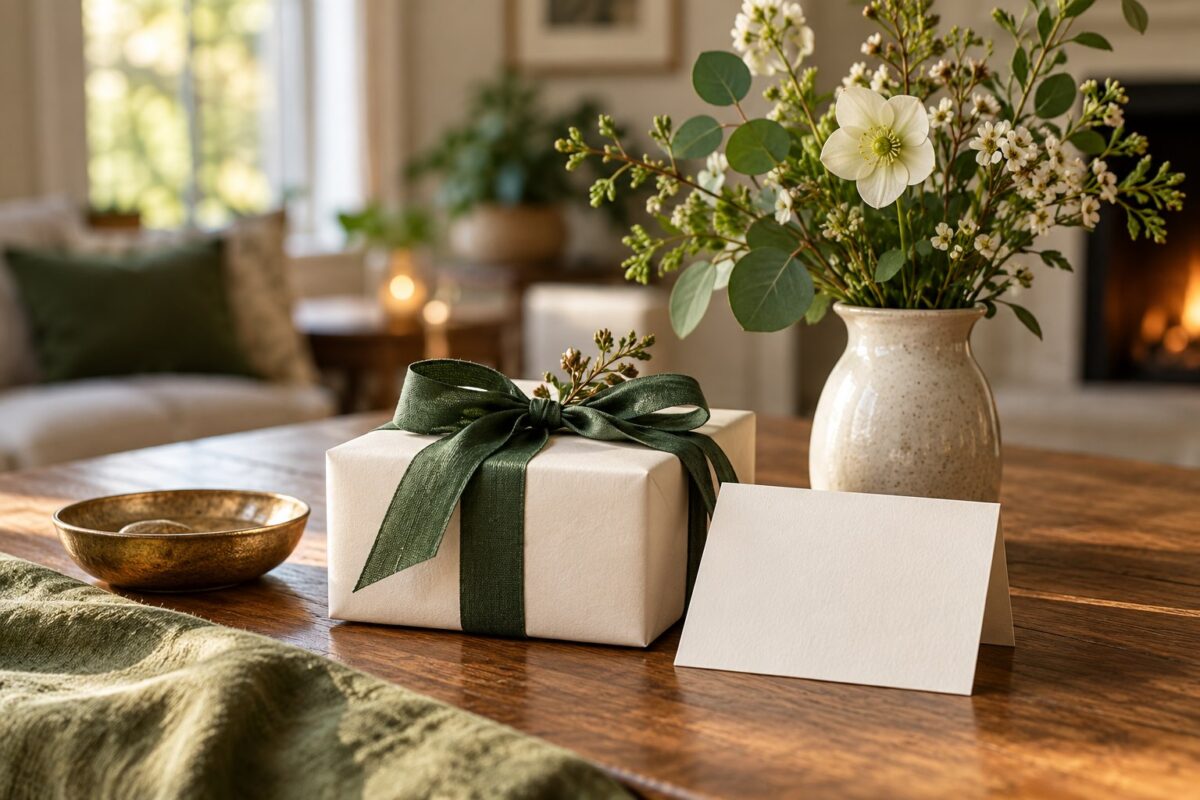
Thoughtful gift etiquette begins with the recipient’s comfort. A present can acknowledge a milestone, thank a host or express affection, but its price does not establish how welcome it will be. Choose something the other person can enjoy freely, without feeling that a particular response is required.
Identify the occasion before the object
Ask what you are acknowledging. A small thank-you after dinner has a different purpose from a shared anniversary gift. Naming the occasion helps you keep the gesture proportionate and avoids letting an appealing object dictate a larger commitment than you intended.
For a host, ask whether bringing something would be useful. Flowers that need arranging during dinner can become another task; a simple note or a contribution agreed beforehand may fit better. Our dinner-party hosting timeline explains the practical work behind a relaxed evening.
Follow preferences, not stereotypes
Use details the recipient has actually shared: an author they enjoy, a hobby they practise or an item they have said needs replacing. Do not assume that every person wants jewellery, fragrance or an expensive experience. Personal taste is more specific than a category such as luxury lover.
If you are uncertain, ask a narrow question: “Would you enjoy a book, or would you prefer that we choose something together?” Asking does not make the gesture less thoughtful. It can prevent a costly mistake and makes room for an honest preference.
Consider the work the gift creates
Some presents bring maintenance, storage, subscriptions or travel arrangements. A large plant needs care. An experience needs time and sometimes transport. A personalised item may be difficult to exchange. Think beyond the moment of opening it to the ordinary week that follows.
Check current exchange terms before purchasing and keep the receipt where appropriate. Avoid surprise animals or commitments that require continuing payments. If a gift depends on dates, agree availability before booking. A beautiful invitation still needs to fit the recipient’s life.
Keep generosity separate from influence
A gift should not buy access to someone’s time, privacy or affection. Do not use an expensive present to settle an argument or make a refusal harder. In a newer relationship, a smaller gesture can leave more room for both people to respond honestly.
For shared choices, our guide to making decisions together considers how resources can affect expectations. Discuss an approximate range if exchanging presents has started to feel competitive or uncomfortable.
Choose a comfortable way to give it
Ask before making a gift public, especially if it includes personal messages or relationship details. A quiet handover can be more considerate than a photograph or a surprise in front of colleagues. Let the recipient decide whether to share it online.
If they decline, accept the answer without making them justify it. If you receive something unsuitable, thank the giver for the gesture and discuss an exchange privately when needed. Appreciation does not require pretending that every object suits you.
Use a four-question check
Before buying, ask: Does this reflect a known preference? Is the occasion clear? Will it create unwanted work? Can the person accept or decline without pressure? A good gift need not answer every wish. It should feel like attention offered freely, with room for the recipient’s own choices.