
Theatre etiquette is mostly a way to help everyone share a live performance comfortably. Arriving with time to find your seat, following the venue’s phone policy and leaving personal conversations for the interval makes the evening easier for the audience, staff and performers.
You do not need specialist knowledge to attend your first show. This guide gives you a practical plan while leaving room for the different expectations of plays, musicals, interactive shows and relaxed performances.
Theatre etiquette before the curtain rises
- Check the date, venue, start time and seat details on your ticket.
- Read access information, audience guidance and any content notices.
- Allow time for travel, entry checks and finding the auditorium.
- Follow instructions about bags, food, phones and photography.
- Ask staff for help with seating or access arrangements.
Read the venue information before leaving home
Look for the running time, whether there is an interval and any guidance specific to the production. A performance without an interval needs a different meal and return-journey plan from a long evening with a break. Verify whether you need to collect tickets or can use a supported digital version.
If stairs, hearing support, captions, sensory conditions or space for mobility equipment matter, contact the venue before selecting a seat. The cheapest or closest seat may not meet your needs. Discuss practical requirements directly instead of relying on a general seating photograph.
Arrive ready to be seated
Give yourself enough time to locate the right entrance, use the facilities and settle coats and bags. Avoid promising an exact arrival buffer that suits every theatre; queues and entry procedures vary. A pre-show meal should leave room for that process.
If delayed, follow the ushers’ instructions. Some productions have designated entry points or ask latecomers to wait. For example, The National Theatre’s visitor guidance in Washington, DC explains its designated seating breaks. That is a property-specific example, not a rule for every theatre.
For dinner beforehand, our restaurant reservation etiquette guide can help you make the timing clear without expecting the restaurant to rush service.
Make your seat comfortable without taking over
Check the row and number before settling in. Keep coats and belongings within your own space and follow the venue’s storage instructions. Avoid blocking an aisle, a neighbour’s view or access to an empty seat.
When moving past seated people, go slowly and acknowledge them. If a seating issue arises, ask an usher rather than arguing across a row. Staff can check tickets and find an arrangement more effectively than audience members trying to resolve it in the dark.
Follow the phone and photography policy
Finish messages before the performance and follow the instruction to silence or switch off devices. A bright screen can distract others even without a sound. If you need a device for an access arrangement, discuss the appropriate setup with staff.
Do not assume photographs or recordings are allowed before the show, during a curtain call or at an interactive moment. Check the current policy for the production. Derby Theatre’s performance policies show how a venue explains its own approach to phones, photography and audience needs.
Take cues from the performance
Applause, participation and singing expectations vary. Follow the show’s guidance rather than treating a musical as permission to perform from your seat. Leave commentary and explanations for the interval so neighbours can hear the actors.
Be considerate about involuntary noise and other people’s access needs. A relaxed performance may intentionally offer different movement and sound expectations. If another audience member’s behaviour creates a problem, speak quietly to staff rather than policing the room yourself.
The same habit of observing the setting appears in our art gallery etiquette guide: ask when unsure, and let the venue’s specific guidance lead.
Plan a gentle finish
At the interval, check how long you have before leaving the auditorium. At the end, avoid immediately turning departure into a race; follow staff directions and check the seat for belongings. If you enjoyed the experience, note the production and one thing you would like to explore next.
Dress for the venue’s guidance, the weather and your comfort. You may already have something suitable; our buy less, buy better checklist is a useful pause before buying an outfit for one evening.
Frequently asked questions
Do I need formal clothes for the theatre?
Check the venue and event guidance. Many performances welcome a range of clothing; comfortable, considerate choices can work without a special purchase.
What if I need to leave during a performance?
Follow the venue’s instructions and ask staff about the exit and re-entry arrangements. Do not assume you can return immediately.
Can I take a photograph at the end?
Only if the production’s policy allows it. A curtain call does not automatically change the recording rules.
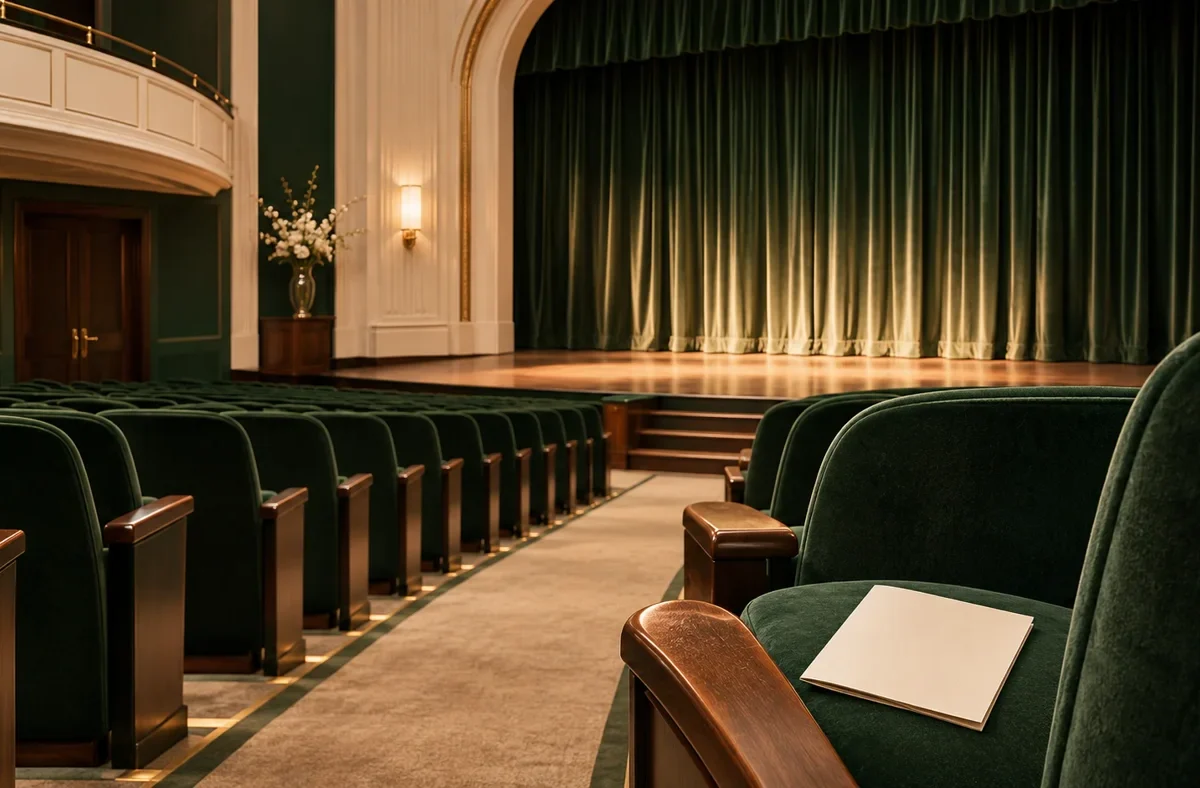
The featured image is an AI-generated illustration of a generic theatre.