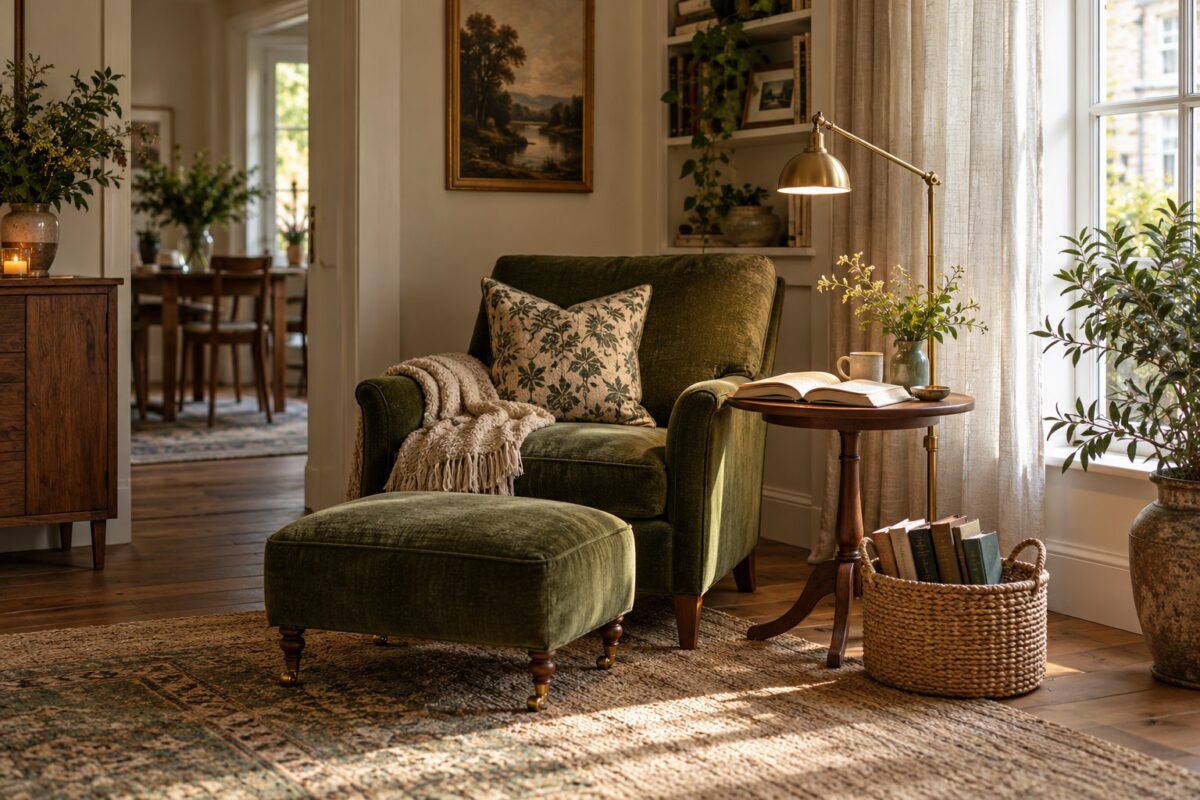
A reading corner does not need a spare room or a complete redesign. It needs a place where sitting with a book feels straightforward. Start with a seat you already own, notice what interrupts reading, and solve one practical problem before adding decorative objects.
Choose a place you can actually use
Watch the room at the time you usually read. A bright window may be pleasant in the morning and distracting late in the day. A quiet-looking corner might sit directly beside the television or a busy doorway. Try the location for an evening before committing to furniture or shelving.
In a shared home, agree how the space will work. A chair can be available to everyone while a particular half-hour remains quiet. Keep routes through the room clear and avoid turning a useful common area into an unspoken private territory.
Test the seat with a real book
Sit for the length of a typical reading session. Check whether you can rest your feet, support your back comfortably and hold the book without constantly adjusting. A striking chair in a photograph may not be the chair you reach for after a long day.
Use a cushion or footrest if it helps, and keep adjustments simple. This is about personal comfort rather than an ideal posture formula. Before purchasing, consider the chair’s dimensions, access to the room and the seller’s current return terms.
Put light where the page needs it
Try a lamp position that illuminates the page without shining directly into your eyes or reflecting sharply from a screen. Test it after dark as well as in daylight. An adjustable lamp lets you adapt the position to different books and seating arrangements.
Keep cables away from walking routes and follow the product’s installation instructions. Choose practical lighting before adding candles or decorative lights. A warm atmosphere is pleasant, but it should not make the page difficult to see.
Give everyday objects a small home
A side table or stable shelf can hold a drink, glasses and the current book. Check that you can reach it easily and that a cup will not sit precariously beside electronics. A basket for two or three books may be enough; you do not need a display library around the chair.
For a wider approach to arranging objects, see our curated living guide. Apply the same question here: does this object make the space easier to use, or does it mainly add another thing to move?
Make starting easier than postponing
Keep one current book in the corner and put the phone somewhere you can choose to leave it. Decide whether music helps you read or competes with the words. Begin with a manageable interval rather than demanding an entire screen-free evening.
Our slow reading essay explores the pleasure of spending time with a longer book. Your corner supports that experience; it does not need to become a project you must finish before you can read.
Review the corner after a week
Notice which small frustrations remain. Perhaps the lamp needs moving, the table is too low or the room becomes noisy at your chosen time. Change one detail and try again. A successful reading corner is one you return to comfortably, even when the rest of the home is busy and the book is still unfinished.