
Linen cupboard organisation works best when it helps you find a complete set without unfolding three piles. The goal is everyday usefulness: towels that fit the household, bedding matched to the beds you use and space to put clean items away without forcing the door shut.
You do not need new baskets or matching labels to start. Work with one shelf at a time, keep the items in regular use and let the cupboard’s size shape how much it holds.
Start your linen cupboard organisation with a small sort
Choose a surface where clean textiles can rest while you work. Empty one section, check the shelf and return only the items that belong there. Keeping the task small makes it easier to finish before the room fills with loose piles.
Group by use first: everyday bath towels, guest towels, bed linen, table linen and spare covers. Separate items that need washing, mending or a decision. Avoid storing an unresolved pile at the back where it becomes difficult to see again.
Match bedding to the beds you actually have
Check sizes and gather each usable set. A fitted sheet, cover and pillowcases do not have to match aesthetically, but knowing which pieces work together saves time. Put a small removable note on a shelf if sizes are otherwise hard to recognise.
Choose a storage method that makes sense to the people using it. Some prefer one set folded together; others keep all sheets of a size in one place. Test one method before applying it to everything. A system that requires elaborate folding may not survive a busy laundry day.
Check care labels before making assumptions
Similar-looking towels or sheets can have different care instructions. Read the label for washing, drying and other treatments rather than assuming all cotton or all pale fabric needs the same process. Keep special-care pieces easy to identify.
GINETEX’s textile-care guide explains the main care-symbol groups. Follow the actual item’s label and product instructions; an organising routine should support appropriate care rather than replace it.
Our wardrobe care routine uses the same principle for clothing: check what the item needs before giving it a place in the regular cycle.
Put frequent-use items within easy reach
Use the most convenient shelf for what you take out every week. Reserve less accessible space for light seasonal items where appropriate, without placing heavy or unstable stacks overhead. Consider the reach and movement needs of everyone in the household.
Keep stacks short enough to remove an item without the pile collapsing. A shelf divider may help, but a smaller quantity may solve the same problem. Leave enough space for air and for your hand to reach the back without dragging every item forward.
Store textiles clean and fully dry according to their care instructions. If the cupboard or an item smells damp, investigate and address the cause rather than hiding it with a fragrance. Do not pack more into a space that already has a moisture problem.
Create a guest bundle only if you use it
A small bundle of guest towels and suitable bedding can make preparation easy. Check it before a visit instead of assuming an untouched pile is ready. There is no need to reserve an entire shelf for a rarely used scenario if it leaves everyday items crowded.
The overnight guest checklist helps you identify what visitors actually need. Clear information and comfortable essentials matter more than a large stock of decorative extras.
Make room without buying a second system
Ask whether worn pieces can be repaired, repurposed appropriately or passed on through a suitable local route. Check an organisation’s current donation requirements before delivering textiles; not every group accepts every item.
Before buying replacements, count what you use between laundry cycles and what still works. Our thoughtful shopping checklist can help distinguish an actual gap from the desire for a matching collection. Use the cupboard for the household you have now.
Keep the reset short
When putting laundry away, return items to the same broad groups and notice whether a pile is becoming awkward. Rotate through the usable items if that suits the household. Revisit the layout when a bed changes or someone’s needs change, rather than reorganising on a rigid schedule.
A useful cupboard should be understandable without a lengthy explanation. If another person cannot find a towel, simplify the categories before adding more labels.
Frequently asked questions
How many sets of bedding do I need?
That depends on your laundry cycle, storage and household needs. Count what is used and what is waiting to be washed before buying more.
Should all my towels match?
No. Condition, comfort and ease of finding the right item matter more than matching colours.
Do I need storage boxes?
Only if they solve a specific problem. Try the shelf layout first and choose containers that fit without hiding everything.
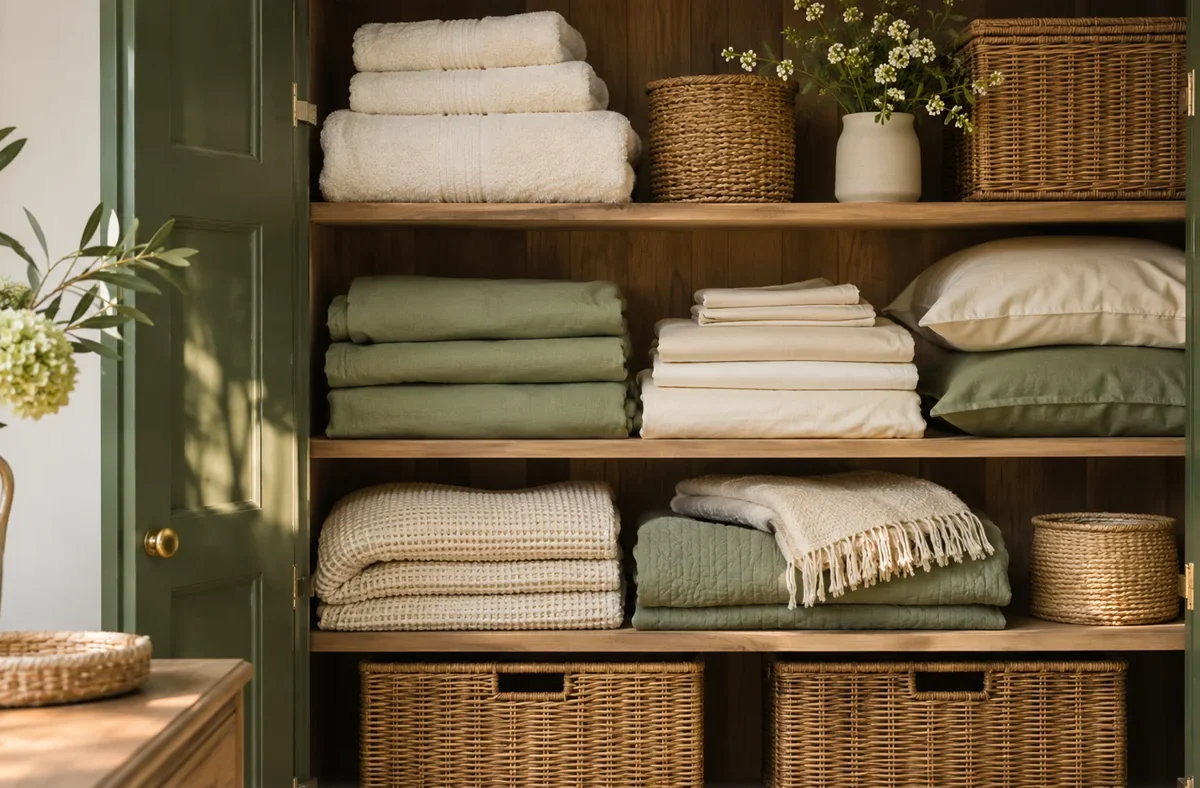
The featured image is an AI-generated illustration of a generic linen cupboard.