A dinner party hosting timeline turns an evening of last-minute tasks into a sequence you can manage. For six guests, the aim is not restaurant-style service. It is a welcoming room, a meal you can prepare confidently and enough free attention to join your own table.
This plan assumes a small dinner at home, with a starter, a main course and dessert. Adjust it to your kitchen, guests and available time. Fewer courses served comfortably usually create a better evening than an ambitious menu that keeps the host out of the room.
One week before: invite and ask
Give guests a clear arrival time, location and a simple description of the evening. Ask about dietary requirements and accessibility needs privately, rather than making someone explain them at the table. Confirm whether guests are bringing a partner so that the seating and food quantities match the actual group.
Choose a menu around dishes you have made before. Write down which items need the oven, hob, refrigerator or last-minute attention. If several dishes compete for the same equipment, change the menu now. Include an appealing alcohol-free drink as a normal choice, not an afterthought.
Three days before: make the evening fit the space
Count chairs, glasses, plates and serving utensils. Borrow what is missing or simplify the service. You do not need matching pieces, but everyone should have a comfortable place to sit and enough space for their plate. Check the route between the kitchen and table so that bags or spare chairs do not block it.
Make a shopping list organised by dish, then combine repeated ingredients. Choose one place for coats and another for drinks. Consider a seated starter or a simple shared first course if passing multiple trays would make the room crowded. Our guide to curated living offers ideas for making a room feel intentional without filling it with more objects.
The day before: remove decisions from tomorrow
Prepare components that suit advance preparation and follow the recipe’s storage instructions. Set out serving dishes with a note showing what belongs in each. Write a short cooking order, including when an oven needs to be free and which dish can wait while you greet guests.
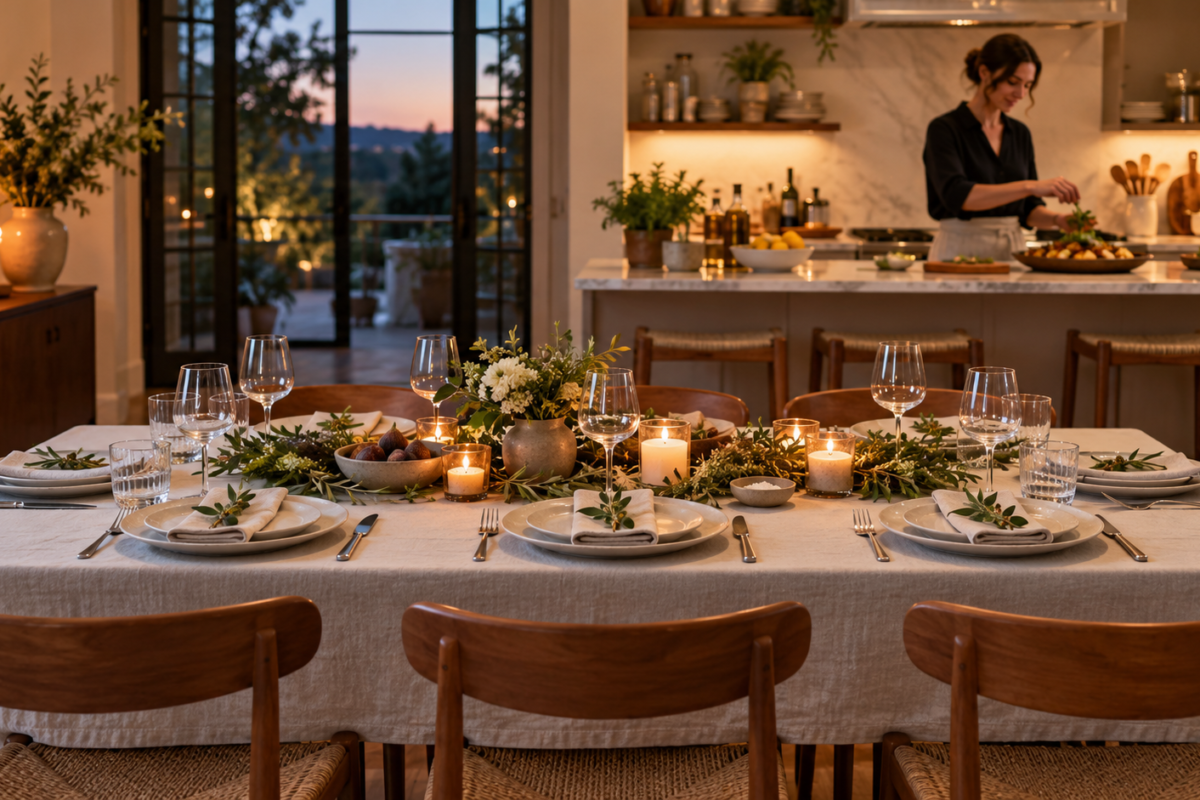
Set the table if you can keep it clear until the dinner. A low arrangement leaves sightlines open. Keep fragrance subtle so that it does not compete with the food. Select background music that allows conversation at an ordinary speaking volume. Finally, clear the washing-up area; tomorrow’s service will be easier with an empty workspace.
Two hours before: prepare for arrival
Finish tasks that require concentration first. Arrange water, drinks and any simple welcome snack. Check the bathroom and entry area. Leave a little time to change clothes and sit down before the first guest arrives. A host who has had a pause is more available than one still reorganising the menu at the door.
If something is running late, simplify. Omit a garnish, serve fewer starters or place a dish on the table for sharing. Do not add a new cooking technique at this stage. Your guests are coming for an evening together, and a workable plan has more value than a complicated rescue.
During dinner: stay at the table
Introduce guests with one easy point of connection, without disclosing private information. Offer drinks without assuming that everyone wants alcohol. Keep the opening conversation broad enough for the whole table, then allow smaller conversations to develop naturally.
Serve portions and courses at a comfortable pace. If help is offered, give one concrete task, such as carrying a serving dish. Avoid turning an offer of help into a full kitchen assignment. For table manners and considerate service, see our fine dining etiquette guide.
After the main course: make the ending easy
Choose a dessert that needs little attention and offer coffee or tea as an option. Move only what needs clearing; you can leave most washing up until later. Let guests know about any transport detail they need, without making the evening feel abruptly over.
The next day, send a brief thank-you when appropriate and note one change you would make for the next dinner. This is how a personal hosting style develops: through small adjustments rather than increasing the complexity every time. For an atmospheric editorial companion, read the art of the private dinner.
The timeline at a glance
One week: invite, confirm numbers and requirements, choose familiar dishes. Three days: check equipment, space and shopping. One day: prepare suitable components, set the table and write the cooking order. Two hours: clear the workspace, arrange drinks and take a pause. During dinner: introduce, serve and join the conversation. Afterwards: thank guests and record one useful improvement.