A personal item packing list keeps the things you need during a journey close at hand. The useful bag is the one you can carry comfortably, open without unpacking everything and place where your transport provider requires. Extra pockets only help when each has a purpose.
This guide focuses on organising a small companion bag for travel day. It is not an airline allowance: the number, size, weight and permitted contents of your bags depend on your actual ticket, route and operator.
Personal item packing list: the essentials
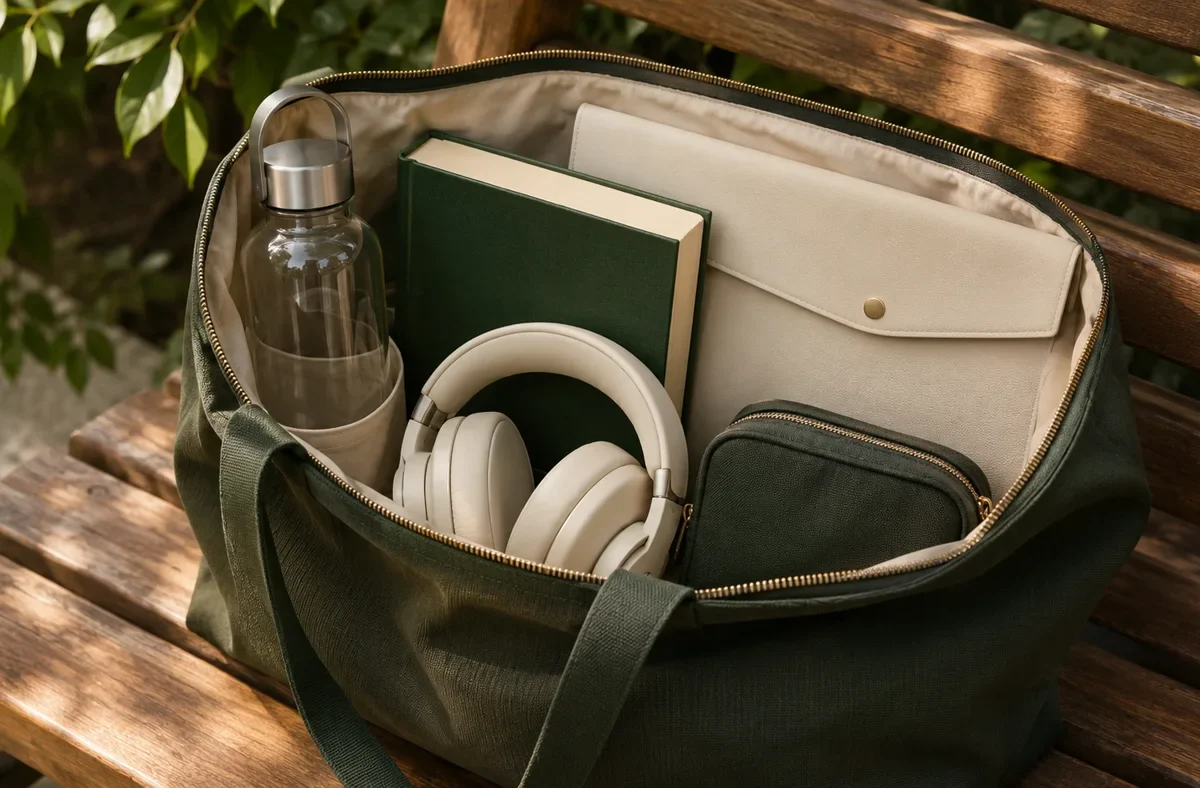
- A secure pouch for the documents and payment items you need en route.
- Your phone, charging cable and any permitted charging equipment.
- Medication and essential personal items suited to your journey.
- Headphones, glasses and a small comfort layer if useful.
- A book or another simple activity you will actually use.
- An empty refillable bottle where appropriate, plus suitable food if permitted.
- One small space for items you collect during the day.
Start with the rules, then choose the bag
Check the allowance on the booking rather than buying a bag described as universally approved. Include every carrier on a connecting journey. A bag that fits one service may not fit another, and an allowance described as cabin baggage may be different from a smaller under-seat item.
British Airways’ baggage essentials is one example of an official operator reference. Use your own carrier’s equivalent information for current dimensions and restrictions. Check liquids, batteries, sharp objects, food and medical items separately when flying; this packing list does not replace those checks.
Organise by when you will need things
Make three small groups: frequent access, occasional access and items that must stay secure. Tickets and glasses may need to be reached repeatedly; a spare top can sit deeper in the bag. Keep valuables in a closed compartment you can monitor rather than a loosely open outer pocket.
Pack the bag once and practise finding a document with one hand while it rests on a chair. If you need to empty it to reach the bottom, remove something or move the item you need most. Avoid a collection of identical pouches that makes you open every one.
Choose comfort items for the real journey
Think about the longest period between useful stops. A short train ride does not need the same contents as a full day of connections. A layer, a small snack where allowed and something to read may be more useful than several gadgets you will not switch on.
Keep essential medication and personal items accessible, following any storage and transport instructions that apply to them. If you need assistance or a particular arrangement, discuss it with the provider in advance. Do not depend on finding a replacement at the station or airport.
For the rest of your luggage, our weekend capsule packing guide helps separate travel-day needs from the clothes and extras you can leave in the main bag.
Keep technology small and usable
Bring the correct cable and check that it works before leaving. Download tickets and useful information through the provider’s supported options, and keep a backup suitable for your journey. Do not assume mobile reception, an accessible socket or free Wi-Fi will be available whenever you need it.
Check the transport rules for power banks and batteries instead of assuming all charging equipment travels in the same bag. Pack headphones so they do not become tangled with documents. A phone stand, tablet and laptop may all duplicate an activity one device could cover.
Leave a little space for the return
An entirely full bag becomes awkward when you need to tuck away a scarf or receipt. Leave room for the small items travel creates. Keep a separate pocket for used tickets and rubbish, then clear it at an appropriate stop.
Before leaving a seat, check the pocket, table, nearby socket and floor. Our slow travel by train guide offers a wider approach to connections and luggage, while the hotel checkout checklist covers the same final sweep at the end of a stay.
Frequently asked questions
Is a personal item the same as cabin baggage?
Not necessarily. Operators use different terms and ticket conditions. Read the allowance for your exact service and fare.
Should I fill every pocket?
No. A little empty space makes access easier. Give pockets a clear purpose and remove things that duplicate one another.
What should I check before leaving a seat?
Look for documents, phone, charging equipment, glasses and anything placed in the seat pocket or beside you. Make the check part of every transfer.
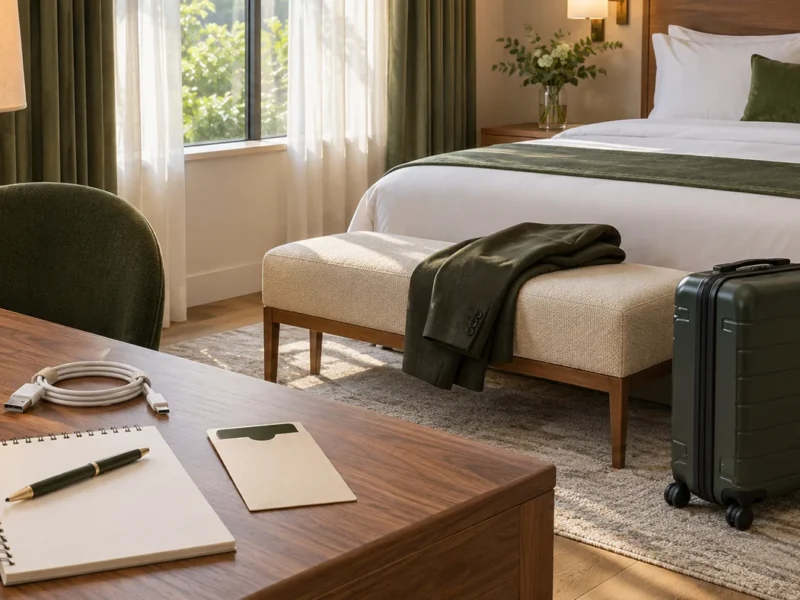
The featured image is an AI-generated illustration of generic travel essentials.