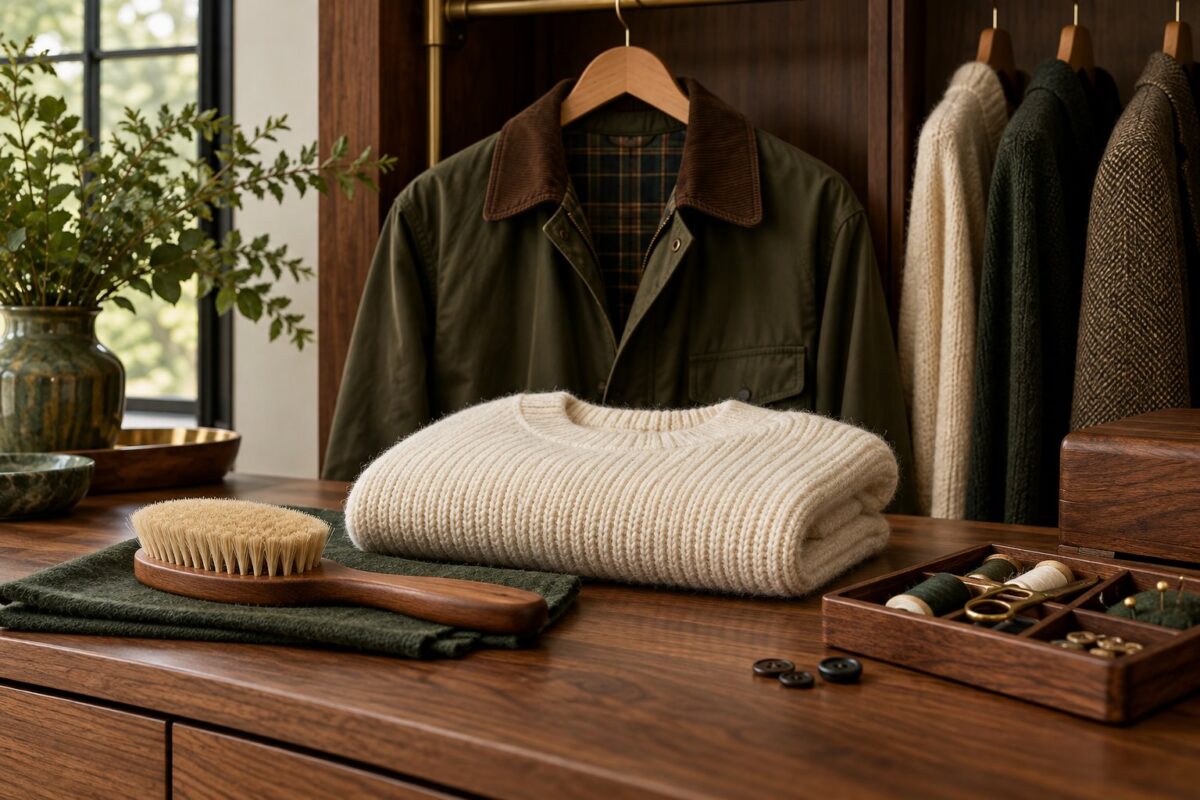
A wardrobe care routine helps keep clothes ready for the life you already lead. It begins when you take something off: check its condition, decide what needs cleaning and give each item an appropriate place. Consistency is more useful than a shelf of products you rarely use.
This guide focuses on organising care decisions rather than prescribing one treatment for every fabric. Our wardrobe essentials guide can help you identify the pieces you reach for most often.
Read the whole care label first
Fabric names alone do not settle how to clean a garment. Linings, dyes, trims and construction also matter. Read the manufacturer’s instructions before washing, steaming, ironing or applying a stain product. If the label is unclear, ask the brand or a suitable professional cleaner.
GINETEX’s textile care guide explains the main care processes covered by its labelling system. Use it to interpret a label, then follow the instructions for the actual garment. Do not assume that a familiar machine setting suits everything labelled delicate.
Take a clear photo of a difficult label and keep it with any special instructions. This is especially useful for pieces whose labels become hard to read or for items you send to a cleaner infrequently.
Create a short after-wear check
Before putting clothing away, look for marks, loose threads, damaged closures and objects left in pockets. Separate pieces that need attention so that they do not quietly return to the ready-to-wear rail.
- Ready: clean, dry and in wearable condition.
- Needs cleaning: keep in an appropriate laundry or professional-cleaning group.
- Needs repair: attach a short note describing the problem.
- Needs a decision: set aside items that no longer fit or serve a purpose.
These categories prevent the same loose button from surprising you before every dinner. They also keep a small problem visible while it is still easy to discuss with a tailor or repair service.
Plan cleaning around real use
Choose a regular time to sort care tasks, and check that the items in each load have compatible instructions. Empty pockets and close fastenings as directed. Avoid treating a new stain with an improvised mixture simply because it worked on a different material.
When a garment is important or the material is unfamiliar, a professional assessment may be more sensible than experimenting. Tell the cleaner what caused the mark if you know, and disclose any treatment already attempted. Ask about expected results and risks before authorising specialist work.
Allow enough time for clothing to dry fully before storing it. Rushing an item from laundry to a crowded wardrobe makes it harder to assess whether it is really ready for use.
Give clothes enough support and space
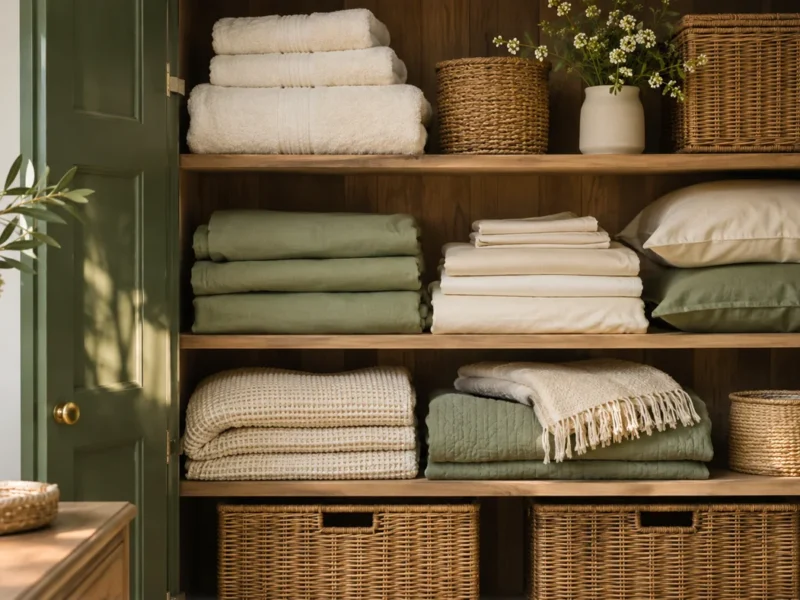
Use storage that suits the item’s construction and the space available. Avoid stretching delicate pieces onto unsuitable hangers or cramming everything so tightly that you cannot see it. Keep shelves and drawers clean and dry, and review items periodically rather than sealing them away and forgetting them.
| Task | Useful question |
|---|---|
| Hanging | Does this hanger support the garment without pulling its shape? |
| Folding | Can I lift one item without disturbing the whole stack? |
| Seasonal storage | Is it clean, fully dry and stored according to its needs? |
| Repair | Have I recorded the problem and set a realistic next step? |
Use a manageable weekly reset
Choose one short session to review the next week’s likely outfits. Check the actual pieces rather than assuming they are available. Set aside anything needing attention and arrange one repair or cleaning task you have been postponing.
Before travelling, use the same check with our weekend capsule packing plan. A reliable small wardrobe is more useful than an ambitious bag of clothes that need pressing or repairs on arrival.
Care also changes what you buy. If a piece demands a routine you cannot maintain, consider whether it fits your everyday life. Our mindful indulgence guide offers questions for making that decision deliberately.
Frequently asked questions
How often should I clean every garment?
There is no single interval for all clothing. Follow the label and assess use, condition and hygiene needs.
Can steaming replace washing?
Do not treat steaming as a universal substitute. It may not suit the material or address the reason the garment needs cleaning.
What is the easiest habit to start?
Separate clothes needing attention from those ready to wear. That single distinction makes the rest of the routine easier.