
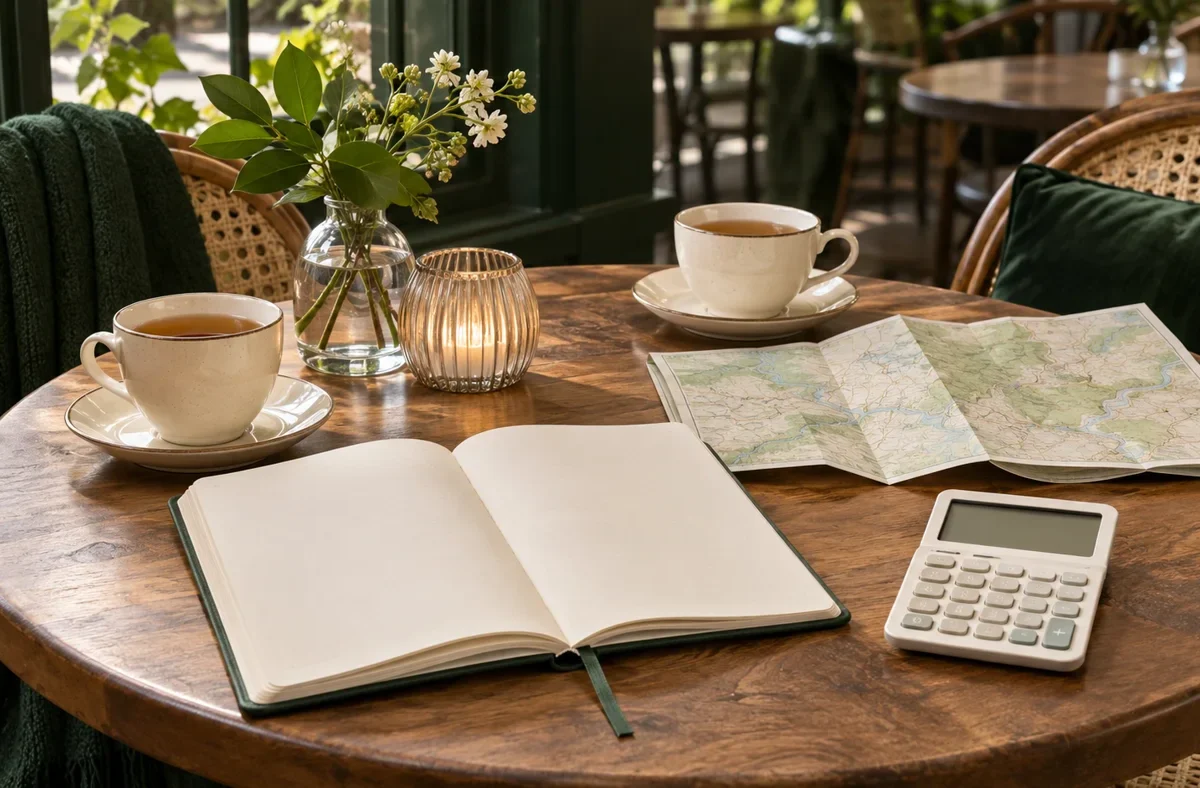
A travel budget conversation for couples can prevent a beautiful trip from being shaped by assumptions neither person has said aloud. Before choosing a hotel or booking transport, agree on what each person can comfortably spend, what you want from the trip and how shared decisions will be made.
This is a planning conversation, not advice about loans, investments or how much you should spend. The right arrangement is one both people understand and freely accept, with room to say that a plan is too expensive.
Start with a comfortable limit, not a dream itinerary
Choose a quiet moment before either person becomes attached to a particular booking. Ask: “What amount would feel comfortable for this trip, including the parts we pay for separately?” A limit should reflect what you are willing to spend, not what you can technically put on a card.
Avoid asking someone to disclose more financial information than the trip requires. You can plan within a stated limit without turning the conversation into an audit of savings, salary or previous purchases. If either person needs time to check their position, pause the booking process.
MoneyHelper’s guide to talking with a partner about money offers a useful starting point for choosing a calm setting and discussing goals. Adapt the conversation to your relationship rather than using a single formula as a test of fairness.
List the full trip in plain categories
Make a short working list: transport, accommodation, local journeys, meals, activities and personal extras. Add charges you already know about, and mark costs that still need checking. A low nightly rate can be misleading if getting to the property or eating there is expensive.
Write estimates as estimates. Confirm the total payable price and conditions with providers before making a commitment. Our travel compatibility checklist helps connect those costs with pace, privacy and the kind of holiday you both want.
Choose priorities separately, then compare
Each person can name one or two things that would make the trip worthwhile: a comfortable room, a particular exhibition, time by the sea or a long meal. Compare those before filling the schedule with activities that neither of you strongly values.
If priorities differ, explore options without framing one person as extravagant or unadventurous. A simpler hotel may make room for an experience; a shorter stay may allow more comfort. There may also be no workable compromise for this particular trip, and choosing another plan is a valid outcome.
Agree how shared expenses will be handled
Some couples divide costs equally; others agree on another contribution. Discuss the arrangement explicitly, including who books, when money is transferred and which costs remain individual. Do not assume a higher income means unlimited willingness to pay.
Try: “I’m comfortable contributing this amount. If you would like the room upgrade, how would you like us to handle the difference?” An offer to cover an extra should be clear and free of later expectations. Paying more does not buy control over the itinerary or affection.
Keep a simple shared record of agreed expenses if it helps. Avoid collecting unnecessary private account details. A note showing the amount, purpose and who has paid can be enough for a short trip.
Set a rule for changes and upgrades
Decide what needs another discussion: a room change, an added activity or a costly restaurant. Give both people a way to opt out before a new expense is booked. “I have found an optional tour; shall we look at the price together?” is easier than announcing that it is already paid for.
Review cancellation deadlines and responsibility for changes before committing. Do not promise that insurance or a provider will reimburse a change without checking the relevant conditions. Keep confirmations where both travellers can find the parts they need.
Leave room for different choices during the trip
One person can enjoy a paid activity while the other chooses a quiet afternoon. Agree whether you want that flexibility and how you will coordinate meeting again. Our shared calendar guide explores maintaining independence within a shared plan.
Have a brief review if the actual costs differ from your expectations. Focus on the remaining choices instead of keeping score. If a preference changes, say so while the plan can still adapt.
For the final morning, the hotel checkout checklist includes reviewing the itemised bill, which can help both people understand the final shared costs.
Frequently asked questions
Do couples have to split travel costs equally?
No. Discuss a clear arrangement both people accept. Equality of contribution is not the only possible approach, and neither person should be pressured.
What if one person wants a more expensive trip?
Discuss a smaller plan, a shorter stay or an explicitly agreed contribution. Do not book first and ask the other person to find the money later.
How detailed should the budget be?
Detailed enough to understand the main costs and shared commitments. A short trip may need only a simple list and a clear rule for changes.
The featured image is an AI-generated illustration of a travel-planning table.