
Coffee date etiquette helps a first meeting feel simple, considerate and easy to leave when either person is ready. A clear invitation, a suitable public cafe and a little attention to comfort usually matter more than choosing an impressive venue. The aim is to learn whether you enjoy one another’s company without turning a short meeting into a test.
This guide covers an adult first date at a cafe, from confirming the plan to following up afterwards. Adapt the suggestions to your circumstances and cultural expectations, while keeping each person’s choices and boundaries clear.
Coffee date etiquette at a glance
- Agree on the cafe, time and a manageable first-meeting window.
- Choose a public setting and arrange your own journey.
- Check opening hours, seating and practical access needs.
- Order what you actually want and clarify payment without pressure.
- Share the conversation rather than running through an interview.
- Ask before extending the date, taking photos or making physical contact.
- End kindly and communicate honestly about meeting again.
1. Send a specific, low-pressure invitation
Try: “Would you like to meet for coffee at the cafe on Market Street on Saturday at 11? I can stay until around noon.” A named place and a clear time are easier to accept or adjust than an open-ended suggestion to catch up sometime.
Give the other person room to suggest a different venue or decline. A first date does not need to last a fixed number of minutes, but an approximate window can make planning easier. Avoid framing an end time as a countdown; it simply gives both people a clear starting expectation.
2. Choose comfort and practical access
Pick a public cafe where conversation is possible and staff and other customers are present. Check whether it will be open, whether it accepts reservations and whether seating is normally available. A famous venue with a long queue may be less useful than a straightforward place where you can hear one another.
Ask about practical needs without demanding personal explanations. “Would this location and seating work for you?” allows someone to raise access, travel or menu concerns. Check essential arrangements directly with the cafe rather than assuming a photograph tells the full story.
If the venue requires booking, our restaurant reservation etiquette guide covers confirmations and changes. Avoid treating a request for a quiet table as a guaranteed arrangement.
3. Keep your own arrival and departure options
For a first meeting with someone you do not yet know well, meet at the public venue and arrange your own transport. Let a trusted person know your plans. Keep enough charge on your phone and choose a journey home that does not depend on your date.
RAINN’s guidance on safer dating recommends public meetings, sharing plans with someone trusted and maintaining control over transport. These steps may help reduce risk; they do not guarantee safety, and someone else’s harmful behaviour is never your fault.
Confirm the plan before setting out and send a realistic update if delayed. If the cafe is unexpectedly closed or unsuitable, agree on another public place. You can also reschedule rather than accepting a change that makes you uncomfortable.
4. Order and pay without making it a performance
You can choose tea, a cold drink or something else instead of coffee. There is no need to apologise for preferences or match the other person’s order. Check whether the cafe uses counter service before taking a table, and leave room for other customers while deciding.
A simple “Shall we order separately?” or “I’d be happy to get these, if that works for you” removes uncertainty. If someone prefers to pay their own way, accept it. Buying a drink does not create an obligation to stay longer, meet again or show affection.
Keep the choice within your own budget and avoid commenting on the other person’s spending. If you offer to pay, do so without making the bill the centre of the conversation. There is no universal rule that assigns payment by gender.
5. Make conversation mutual
Begin with something easy to respond to: a local place they enjoy, a recent activity or how they like to spend a free afternoon. Offer a little of your own experience too. A thoughtful follow-up often creates more room to connect than moving immediately to another question.
Our first-date conversation guide offers examples that leave space for a natural exchange. You do not need to cover work, family, past relationships and future plans in a single cup of coffee.
Allow someone to pass on a question. Avoid pressing for an address, employer details or private relationship history. Keep your phone aside unless you need it for an explained practical reason, and ask before photographing or tagging the person. Our guide to digital boundaries explores why sharing should remain a choice.
6. Ask before extending the plan
If the conversation is enjoyable, suggest an extension without assuming agreement: “I have a little more time. Would you like another drink, or shall we leave it here?” A person who needs to go may still have enjoyed the date.
A move to another location is a new decision, not an automatic next step. Either person can keep to the original plan. The same principle applies to physical contact: a friendly meeting does not make a hug or kiss expected.
7. End with warmth and clarity
A simple “Thank you, I enjoyed meeting you” is enough at the door. If you want to meet again, say so without demanding an immediate commitment. If you do not, avoid promising another date merely to soften the goodbye.
Follow up in your usual voice. “I enjoyed our conversation about books. Would you like to meet again next week?” gives the other person something clear to answer. If you decline a further invitation, a brief, kind message is usually sufficient; you do not owe a debate about your decision. If someone is pressuring or threatening you, prioritise your safety over continuing a polite exchange.
Frequently asked questions
How long should a first coffee date last?
Agree on a window that fits both schedules. An hour can be a convenient starting plan, but there is no required duration and either person can end the meeting sooner.
Is it rude to split the bill?
No. Discuss it simply and respect a preference to pay separately. Payment should not be used to test someone’s interest or generosity.
What if there is no chemistry?
You can still finish courteously without extending the date or promising another meeting. A first meeting is a chance to discover compatibility, not a commitment to create it.
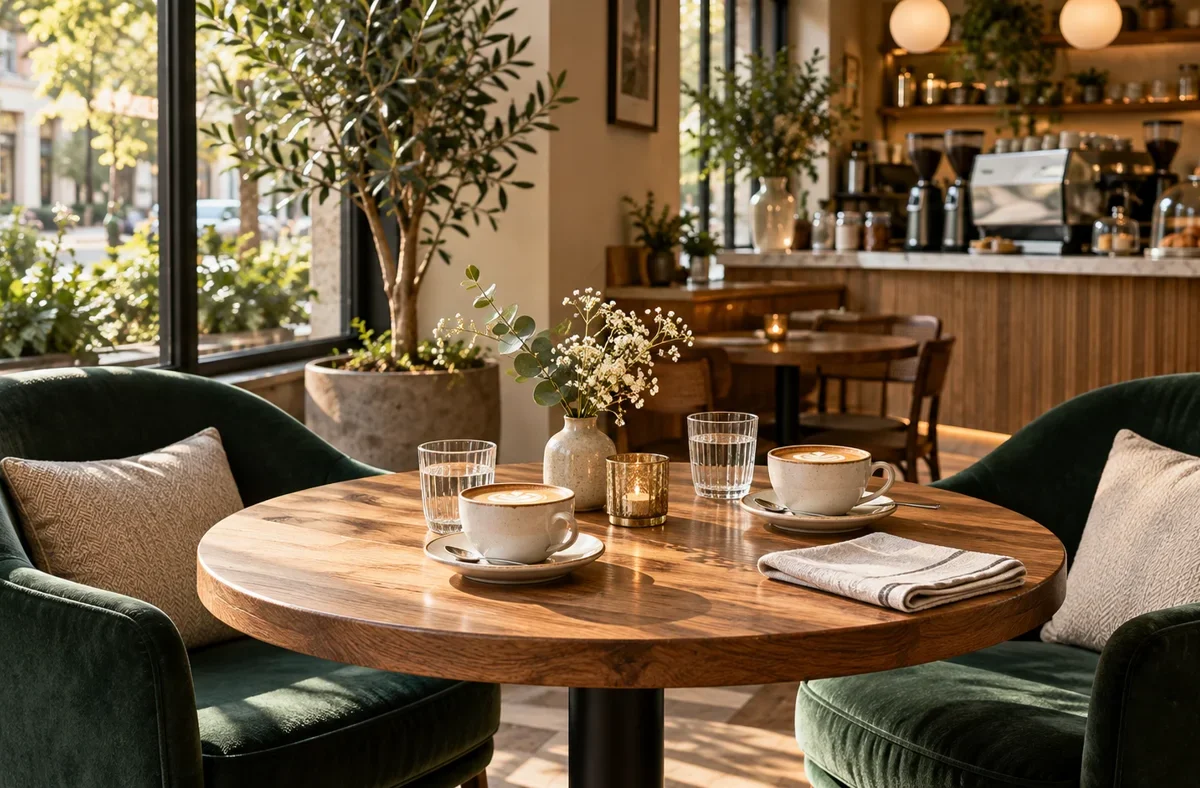
Editorial note: The featured image is an AI-generated illustration of a generic cafe, not a photographed or reviewed venue.
